

By a Thread
the fear of the week

Linonophobia: The Fear of Strings
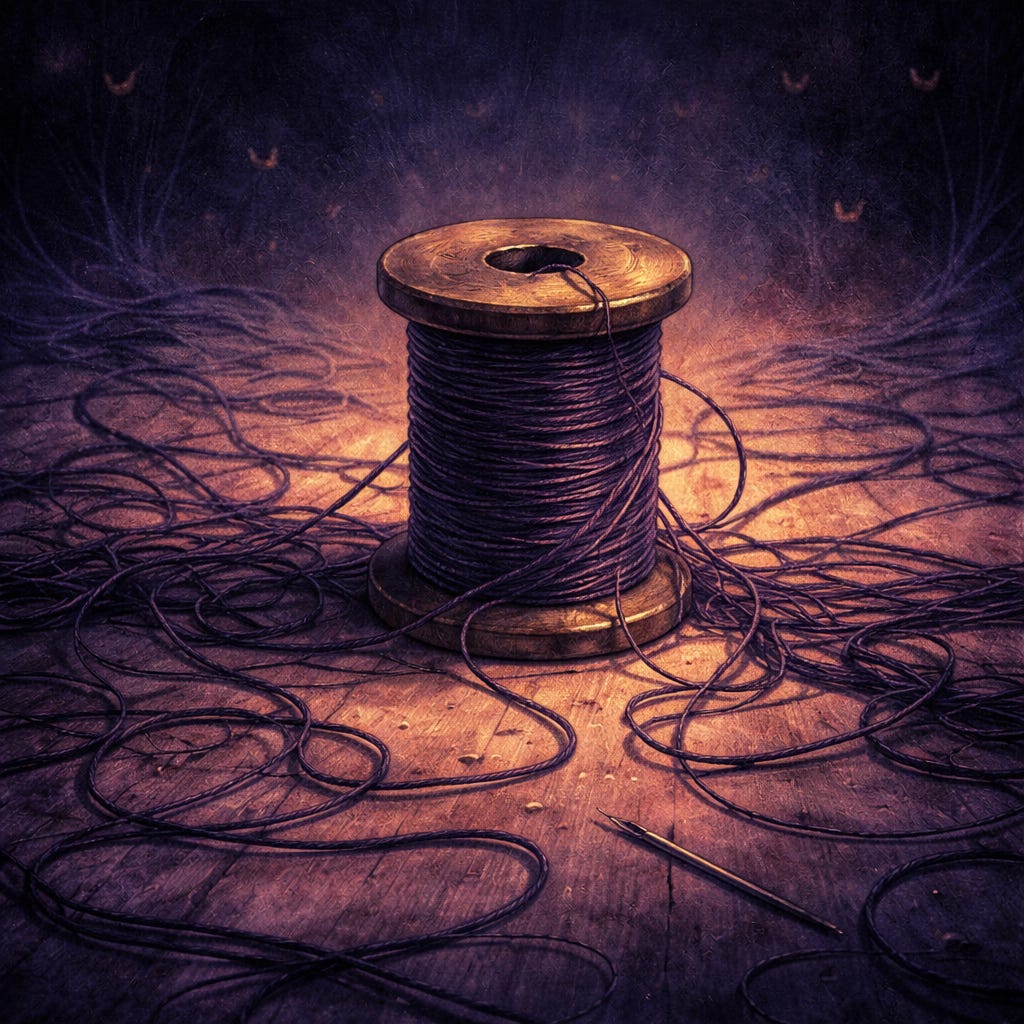
Definition:
Linonophobia is the specific, irrational fear of strings – including thread, yarn, and sometimes rope. It’s a rare anxiety disorder marked by intense discomfort, panic responses, or avoidance of string-related items such as shoelaces, sewing materials, or loose threads.
Real-World Resonance:
String is ordinary. Harmless. Everywhere. But for someone with linonophobia, contact can trigger a visceral reaction. Skin crawls. Breathing tightens. The urge to escape takes over.
It’s not the object itself. It’s what string implies: restraint, entanglement, loss of control. For some, the fear traces back to trauma – being tied down, trapped, or unable to move. For others, the origin is unclear, but the body reacts as if danger is present all the same.
Everyday moments become calculated. Untied shoes. Loose threads on clothing. A craft table. A gift wrapped in twine. The world fills with small, avoidable threats – each one quietly reinforcing the instinct to pull away.
Related Phobiac:
Bobbin
You notice the thread first. A single strand stretched across the floor. Too deliberate to be an accident. It catches lightly at your ankle when you move. Not enough to trip you. Just enough to make you stop. The feeling you get when walking into a spider’s web.
Bobbin stands at the edge of the space, small and tightly wound. His body is wrapped in layers of thread and twine, drawn so tight they erase any clear shape beneath. There is no face, only knots pulled hard where eyes might be, fixed on the moment you decide what to do next.
The threads don’t seem to come from him at first. They appear in the room – across doorways, along the floor, brushing your wrist – as if they’ve always been there. Only when you test one do you feel the resistance, the answering pull, drawing back toward Bobbin’s core.
You feel the urge to free yourself. It pulls at you, and you wonder, should I resist? Pull back? What if pulling unravels more than the thread? What if it pulls something closer instead?
Bobbin doesn’t bind you outright. He waits for the hesitation. For the moment you decide that stillness is safer than risk. The space tightens around that choice. Distance shrinks. Exits feel farther away.
And once you believe you’re trapped, Bobbin barely needs to do anything at all. Because the strongest bindings are made the moment you stop resisting.
Undone:
When I first heard Weezer’s “Undone (The Sweater Song)” on the radio, I remember thinking how strange it was – wonky and weird and different. That half-spoken, half-sung opening. The awkward pauses. The vulnerability hiding inside something that still somehow rocked. It didn’t sound like anything else on the air, and it definitely didn’t sound like it was trying to impress anyone.
Then there was the video – directed by Spike Jonze – which only deepened the feeling that this band was operating on a different frequency. It was playful and low-budget and self-aware in a way that felt new at the time. Back when MTV still felt like a place where discovery happened, catching that video felt like a small victory. Music wasn’t just presented to you back then. You had to work for it.
Finding a band meant catching a song on the radio, hoping the DJ said the title, watching music videos at just the right moment, flipping through magazines, digging through record stores. Discovery took effort. And when you finally pieced it all together – band name, album art, sound – it felt earned. Bands like Weezer felt like treasure. Once you found them, you felt a strange sense of ownership. Not in a gatekeeping way – more like a quiet loyalty. I found this. This is mine.
And Weezer, in particular, felt like they were speaking to a very specific kind of outsider. Not the obvious ones. Not just the nonconformists who were still cool in an unconventional way. Weezer catered to the outskirts of the outcasts – the nerds. Songs that casually referenced comic books and old sitcoms. A frontman who looked like he might be more comfortable in a library than under stage lights. These weren’t rock gods. They were awkward. Earnest. Smart. And most importantly, they rocked.
That mattered to me more than I realized at the time.
I was a nerd – but not exclusively. I played sports. I could sit with the cool kids, but they weren’t my people. On paper, I passed. But underneath that, I could disappear for hours into music, movies, art, and especially comics. I had a comic collection almost no one knew about. I could go deep on things that didn’t always have social value attached to them. I never quite found someone who shared my exact flavor of obsession. Too much of a jock to fully belong to the nerds. Too much of a nerd to ever feel effortless about the rest. That in-between space can feel like its own kind of isolation.
So when The Blue Album came out it felt like permission. Permission to be awkward and loud. Earnest and self-aware. Emotional without apology. “Undone” wasn’t just catchy – it was exposed. The image of a sweater unraveling, thread by thread, was funny and unsettling at the same time. Casual destruction. Vulnerability disguised as a joke.
Strings are small things. Harmless things. Until they’re not. Until they catch. Until they pull. Until what felt loose suddenly feels like it’s coming apart. “If you want to destroy my sweater, hold this thread as I walk away.” It’s a lyric that sounds throwaway until you realize how much trust it implies. How much risk.
Weezer understood that. They understood the fear of being undone – not by some dramatic force, but by something ordinary. Something you handed over without thinking.
For me, that song – and that band – marked a moment when I realized you didn’t have to choose between strength and sensitivity. You could rock and be fragile. You could be weird and still be heard. You could let the thread show. A reminder that being unraveled doesn’t always mean being destroyed. Sometimes it just means you’re honest enough to let the seams show.